 kiruthika
What was found
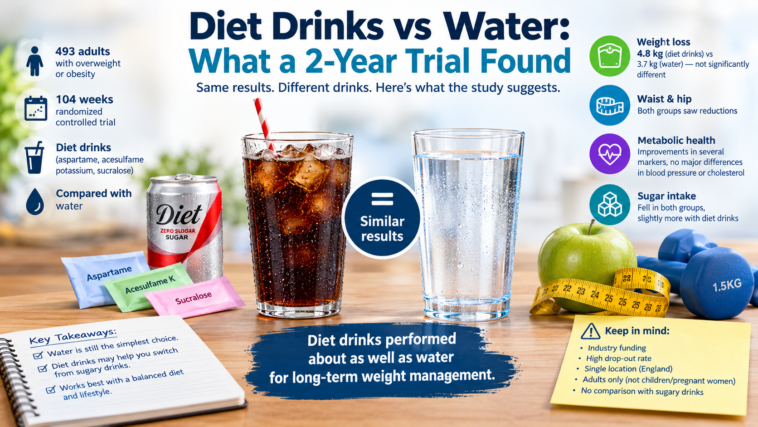
A long-running UK clinical trial has found that, for adults in a structured weight-loss programme, drinking diet beverages did not lead to worse results than drinking water. Researchers at the University of Liverpool describe it as the longest and most comprehensive randomized controlled trial so far on soft drinks made with non-nutritive (low- or no-calorie) sweeteners. They found that over 104 weeks, these drinks performed about as well as water for long-term weight management.
The study is called SWITCH. It enrolled 493 adults with overweight or obesity who were taking part in a behavioural weight-management programme, and randomly assigned each person to drink either water or commercially available diet beverages every day. The drinks were sweetened with aspartame, acesulfame potassium and sucralose.
Why it matters to you
Diet colas and “zero sugar” drinks are now common in Indian shops and homes, often bought by people trying to cut sugar or manage their weight. For years they have been surrounded by conflicting claims. Some say sweeteners trick the brain into craving more food or quietly cause weight gain. Others market them as a weight-loss aid.
This trial tests that question directly over a long period, which is rare. The researchers say their results did not support concerns that these beverages interfere with appetite control or cause long-term metabolic harm. It does not show that diet drinks cause weight loss. That distinction is central to reading this study correctly.
Background and context
This study arrives in the middle of a live scientific and policy debate. In 2023, the World Health Organization advised against using non-sugar sweeteners for weight control, saying the evidence did not show a long-term benefit in reducing body fat. The authors argue that WHO’s position rested largely on uncertain observational research, and that SWITCH adds long-term randomized evidence that could inform future recommendations.
In India, the policy conversation has focused on cutting sugar, fat and salt in children’s diets. The Food Safety and Standards Authority of India (FSSAI) is working on an amendment that would restrict the sale of high-fat, high-sugar and high-salt foods on school campuses and within 50 metres of schools, along with limits on advertising around schools. Evidence on what people drink instead of sugary beverages matters to that discussion.
Key facts and data
Participants received considerable support. They attended weekly weight-loss meetings for the first 12 weeks, then monthly meetings for another 40 weeks, and could choose to continue for a second year without regular sessions.
After two years, average weight loss was 4.8 kg in the diet-drink group and 3.7 kg in the water group, a difference that was not statistically significant. Both groups kept their weight off through the final year, when they no longer received programme support. Both groups also saw reductions in waist and hip measurements and improvements in body composition and several metabolic markers. The researchers found no clinically meaningful differences in blood pressure or cholesterol between the sweetener groups and the water group. Sugar intake fell in both groups, slightly more among those drinking diet beverages. Sweetener intake stayed well within the European Food Safety Authority’s safety limits.
The limitations readers should know
Several limitations matter.
Funding. The trial was funded by the American Beverage Association. The researchers say they worked independently of the funder and kept full control of the analysis and reporting. Industry funding does not make a result wrong, but it is a reason for independent replication.
Drop-out. Only 220 of the original 493 participants completed the two-year follow-up, and the authors acknowledged that this low completion rate limited the study.
Setting. The trial was run at a single location in England. Diets, body types and drinking habits in India differ, and the results may not translate directly.
Context. The findings do not mean that sugar-free drinks alone cause weight loss, because participants were also in a behavioural weight-management programme. The study included adults only. It says nothing about children or pregnant women. It also did not compare diet drinks with regular sugary drinks.
What readers should actually do or watch for next
Water is still the simplest choice. This trial found diet drinks were comparable to water, not better. Plain water costs nothing and carries no open questions.
Diet drinks may be useful as a step away from sugar. If you currently drink sugar-sweetened sodas or packaged juices regularly, the study suggests that switching to a diet version is unlikely to undermine a weight-loss effort. This is especially true as part of a broader plan.
Don’t rely on any single drink. Weight change in this study happened within a structured programme of diet and behaviour support. No beverage replaces that.
Check labels if you have specific health conditions. People with phenylketonuria (PKU), a rare inherited disorder, must avoid aspartame. Labels on aspartame-sweetened products carry a warning for this reason. People with diabetes, kidney disease or other chronic conditions should discuss sweetener use and weight-management plans with their doctor or a qualified dietitian.
Watch for WHO’s response and independent replication. This is one trial. It adds long-term evidence to a debate that has largely relied on observational studies. Whether it shifts official guidance will depend on how it is weighed alongside other research, ideally including independently funded trials in more diverse populations, including in South Asia.
Be wary of extreme headlines in either direction. “Diet drinks help you lose weight” overstates this study. So does “sweeteners make you fat.” The accurate summary is narrower: in this trial, diet drinks did about as well as water for adults already trying to lose weight.
FAQs
Diet drinks did not directly cause weight loss in the SWITCH trial. They performed similarly to water when used alongside a structured weight-management programme.
No. The trial found no statistically significant difference between diet drinks and water after two years. Water remains the simplest zero-calorie choice.
The study found no clinically meaningful metabolic harm from the sweeteners used during the trial, and intake remained within EFSA safety limits. However, safety depends on the specific sweetener and amount consumed.
After 104 weeks, participants drinking diet beverages lost an average of 4.8 kg, compared with 3.7 kg among those drinking water. The difference was not statistically significant.
You can include diet soda as part of a weight-loss plan, but it should not be viewed as a weight-loss treatment. The trial suggests replacing sugary drinks with diet beverages is unlikely to undermine weight management.



GIPHY App Key not set. Please check settings