 kiruthika
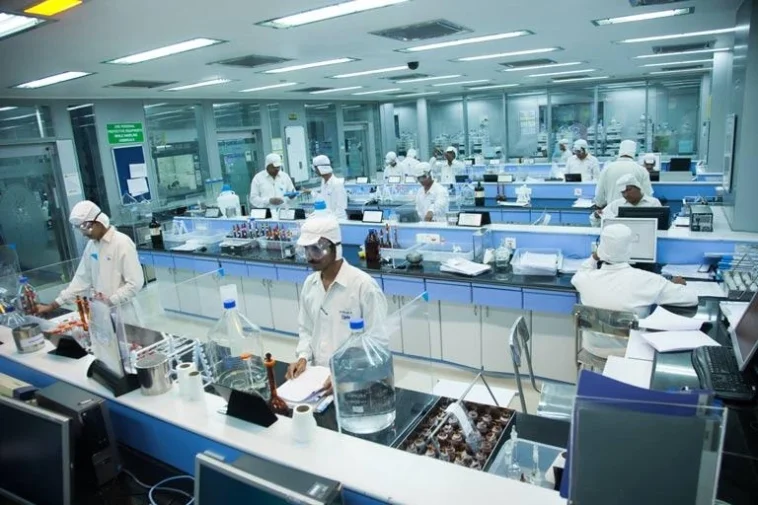
Cipla Limited has entered into an exclusive licensing and supply agreement with China’s Sino Biopharmaceutical (SBP) Group to develop and commercialise an experimental HER2-targeted cancer therapy across India, South Africa and five other emerging markets, the company disclosed to stock exchanges on August 31, 2026.
The News
Under the agreement, Cipla will receive exclusive rights to develop and commercialise Rolditamig Deuderuxtecan — also known by its development code TQB2102 — a HER2 bispecific antibody-drug conjugate (ADC) originally developed by Chia Tai Tianqing Pharmaceutical Group (CTTQ), the pharmaceutical arm of Hong Kong-listed Sino Biopharmaceutical. Cipla will handle local clinical development, regulatory filings and commercialisation in the licensed territories, while CTTQ continues to manufacture and supply the drug. Achin Gupta, managing director and global CEO of Cipla, said the deal strengthens the company’s oncology portfolio with what he called a promising HER2-targeted therapy, and is meant to speed up development and eventually widen patient access across the licensed markets, pending regulatory approvals.
The Numbers
The companies have not disclosed the deal’s financial terms — no upfront payment, milestone structure, or royalty rate has been made public. What is known: the licence covers seven markets in total (India, South Africa and five other unnamed emerging markets), and TQB2102 has already secured three Breakthrough Therapy Designations in China, covering HER2-low and HER2-positive breast cancer as well as ongoing trials in colorectal and biliary tract cancers.
On the numbers that do move by the minute: as of market close on Tuesday, September 1, 2026, Cipla shares stood at ₹1,418.70 on the NSE, down about 0.76 per cent on the session, against an intraday range of roughly ₹1,411–₹1,426. The company’s market capitalisation was approximately ₹1.15 lakh crore (₹1,15,000 crore) at close. Investors should treat this as a snapshot tied to that specific date and time — the stock moves every session, so check a live NSE/BSE quote for the current price.
On the underlying business, Cipla’s Q1 FY27 (quarter ended June 30, 2026) consolidated revenue came in at ₹7,119 crore, up nearly 9 per cent sequentially, with an EBITDA margin of 16.7 per cent and profit after tax of ₹789 crore — up 42 per cent quarter-on-quarter but down sharply from the year-ago period on a higher cost base, including war-related input inflation and a one-off exceptional charge tied to new labour codes.
Why It Matters
For Cipla, this is a strategic pivot as much as a product deal. The company has historically built its India and export business on complex generics, respiratory therapies and anti-retrovirals — not cutting-edge biologics. Licensing a bispecific ADC, a newer class of “smart” cancer drugs that combine an antibody with a chemotherapy payload targeted at two different points on the HER2 receptor, signals an attempt to move up the value chain into higher-margin, innovation-led oncology, an area historically dominated by MNC pharma majors in India. If regulatory approvals come through, it would also give Indian and South African breast cancer patients earlier access to a drug still in the experimental stage globally, at a time when the two markets remain underserved by newer oncology therapies compared with the US, Europe or Japan.
For investors, the deal itself is not immediately revenue-accretive — TQB2102 is still under clinical evaluation and years from a potential launch. Its relevance lies in what it signals about capital allocation and R&D direction rather than near-term earnings.
Context
The agreement comes roughly five weeks after Cipla’s mixed Q1 FY27 print, in which revenue hit a record for the quarter but profitability was squeezed by cost pressures, prompting questions about margin recovery through FY27. Management had guided that new launches — including the respiratory product gVentolin in the US — would help offset the pressure in coming quarters; the HER2 licensing deal adds a longer-horizon oncology lever to that recovery narrative. It also follows a broader pattern among large Indian generic makers — Dr Reddy’s, Sun Pharma and others have all struck in-licensing deals with Chinese biotech firms over the past two years — as domestic majors look to diversify beyond commoditised generics amid pricing pressure in the US and regulatory scrutiny at home, including Cipla’s ongoing litigation with the National Pharmaceutical Pricing Authority (NPPA).
What’s Next
Key milestones to track: regulatory clearances needed before Cipla can begin local trials in India and South Africa; disclosure (if any) of the deal’s financial terms, including upfront and milestone payments; progress of TQB2102 through China’s own regulatory pathway, since approvals there will likely precede and inform filings in Cipla’s licensed markets; and Cipla’s Q2 FY27 results, expected in late October 2026, which will show whether the North America and One India businesses are delivering the margin recovery management has guided toward.
FAQs
Cipla has licensed Rolditamig Deuderuxtecan (TQB2102), an experimental HER2-targeted bispecific antibody-drug conjugate (ADC) developed by Chia Tai Tianqing Pharmaceutical Group.
The agreement covers seven emerging markets, including India and South Africa. The other five markets have not been publicly named.
TQB2102 is a HER2-targeted bispecific antibody-drug conjugate (ADC) designed to deliver a chemotherapy payload while targeting HER2. It is still undergoing clinical evaluation and is not yet an approved treatment in the licensed markets.
No. Under the agreement, Chia Tai Tianqing Pharmaceutical Group (CTTQ) will continue manufacturing and supplying TQB2102, while Cipla will manage development, regulatory activities and commercialisation in its licensed territories.
The deal expands Cipla’s oncology portfolio and strengthens its move toward innovative therapies and biologics. However, because TQB2102 remains experimental, the agreement is unlikely to have an immediate impact on Cipla’s revenue.


GIPHY App Key not set. Please check settings